
Artificial intelligence is a powerful tool for rewriting and optimizing resumes, but it comes with hidden risks that job seekers and employers alike should understand.
Used thoughtfully, AI can improve structure, clarity, and keyword alignment in resumes. Used carelessly, it can introduce red flags that harm credibility and trust in an already high-stakes hiring process.
We asked candidates about their comfort level in using AI tools to assist with writing or updating resumes/LinkedIn profiles. Surprisingly, we noticed more hesitation than expected around using AI for resume updates.
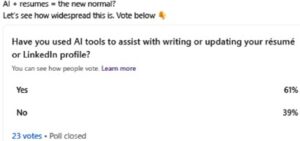
But, considering how generative AI can create hallucinations and exaggerated claims (and in some cases, flat-out lying), that hesitation could work in candidates’ favor.
For Candidates:
- AI doesn’t know your industry as well as you. It cannot reliably judge which skills, experiences, and accomplishments matter most to hiring managers in your specific field. Certain jobs or companies will value different parts of your candidate story. Only you can make that call.
- AI can fabricate or exaggerate information. It may add skills, certifications, or responsibilities that are inaccurate or entirely false. Submitting a resume with erroneous information is effectively misrepresenting your experience and can ruin your credibility with a hiring manager for the entirety of your career.
- AI-generated resumes are often obvious. Generic phrasing, vague accomplishments, and overly polished language can signal to recruiters that a resume was AI-generated, which may come across as lazy or disingenuous. If you are considering submitting an AI-generated resume, so are other candidates. It’s hard to stand out in a crowd (and in a tough job market) when you are making little effort to differentiate yourself and your skills from other candidates.
- You are responsible for accuracy. Even if AI wrote it, you own what’s on your resume.
For Hiring Managers
- Verify the details of resumes. Confirm employment dates, job titles, certifications, and training claims. A well-formatted, confident resume is not proof of accuracy because AI can easily generate plausible-sounding details that aren’t true.
- Request documentation when appropriate. Especially for certifications, licenses, and specialized technical training. In the legal space, the stakes for credentials are even higher. If a role requires a specific software proficiency or education, ask for proof during the hiring process.
- Test knowledge during interviews. Don’t rely solely on what’s written. Validate experience through thoughtful, role-specific questions. If a resume lists deep expertise in a practice area or technology, ask further questions.
How Legal Tech Talent Network Can Help
- For job seekers: We’re always happy to provide resume guidance and feedback to candidates we work with, helping to ensure accuracy, clarity, and credibility.
- For employers: We thoroughly interview candidates and can request documentation for references, credentials, awards, and certifications, reducing risk and saving time.
AI can be a helpful assistant, but it should never replace judgment, honesty, or industry expertise.
Whether you need help sourcing candidates, screening the ones you have, or simply verifying what’s on a resume, we can help. Send us an email to start the conversation.